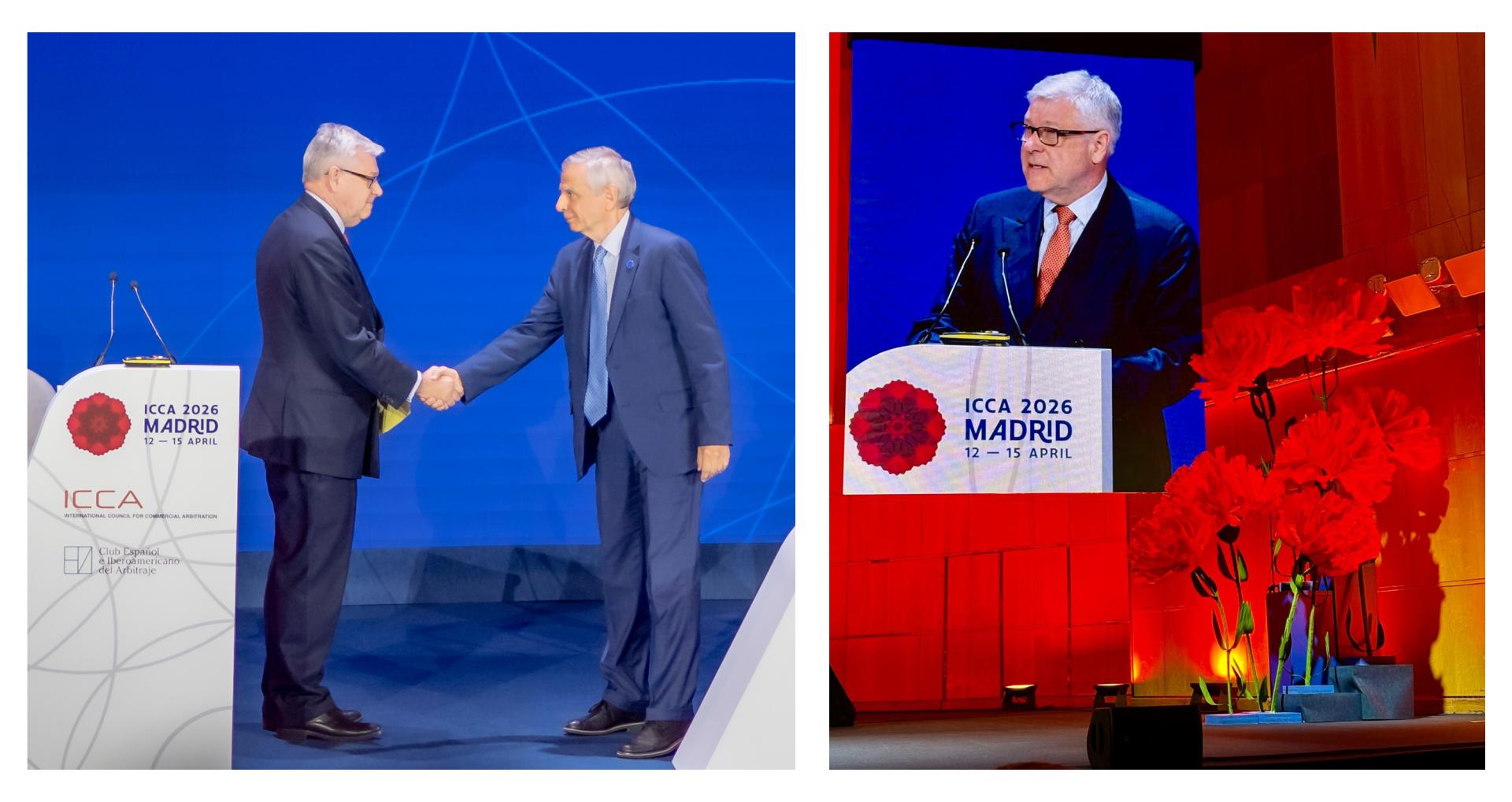
Looking Back at ICCA 2026 Madrid


From 12 to 15 April 2026, ICCA held its 27th Congress in Madrid, attracting some 1,300 delegates from 80 jurisdictions and over 70 speakers. The Programme Committee, chaired by Samaa Haridi, Vladimir Pavić and Tom Sikora, structured the discussions around the theme “International Arbitration: Local, Global or Both?”.
The Opening Ceremony took place at Teatro Real in the heart of Madrid, with performances from the Intermezzo Choir and the Aída Gómez Dance Company.
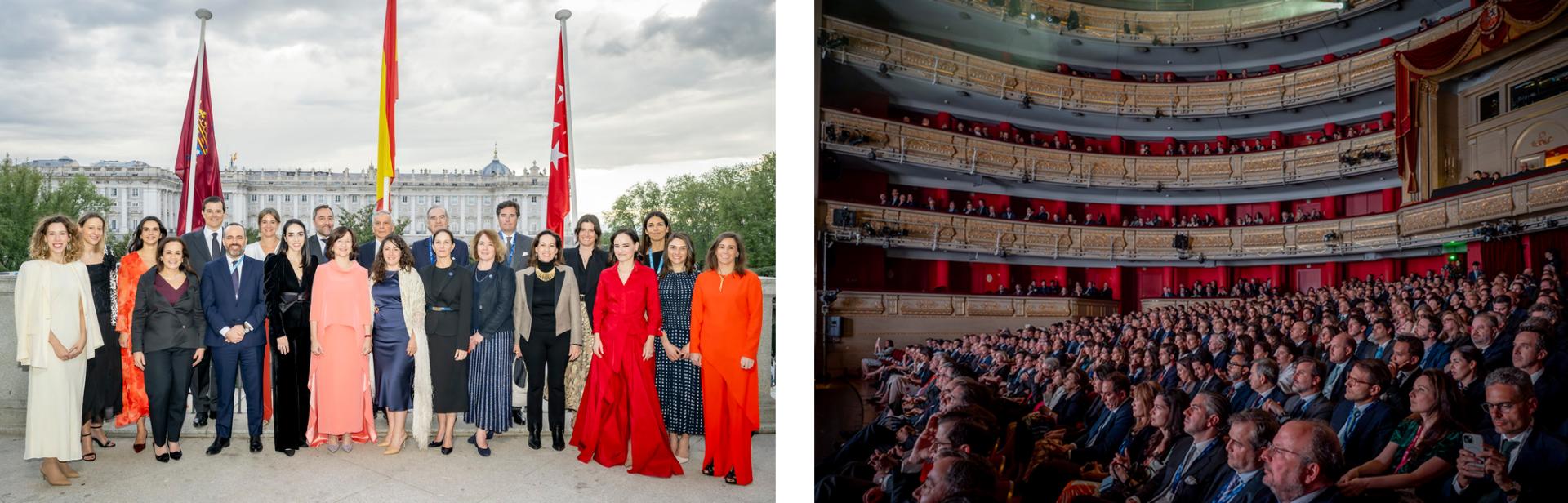
Members of the ICCA 2026 Madrid Host and Programme Committees with the ICCA Executive Body; delegates at the ICCA 2026 Madrid Opening Ceremony.
Following welcoming remarks by ICCA President Dr. Stanimir Alexandrov, the Opening Keynote address on the Monday morning was delivered by Dr. Hab. Marcin Czepelak, Secretary‑General of the Permanent Court of Arbitration, who highlighted the evolving role of arbitral institutions in navigating the increasingly complex global–local dynamic in international dispute resolution. This was followed by plenary remarks from Anna Joubin-Bret, Secretary of UNCITRAL, who emphasised the foundational importance of the New York Convention and the Model Law, while cautioning against complacency amid digital transformation and evolving cross-border complexities.
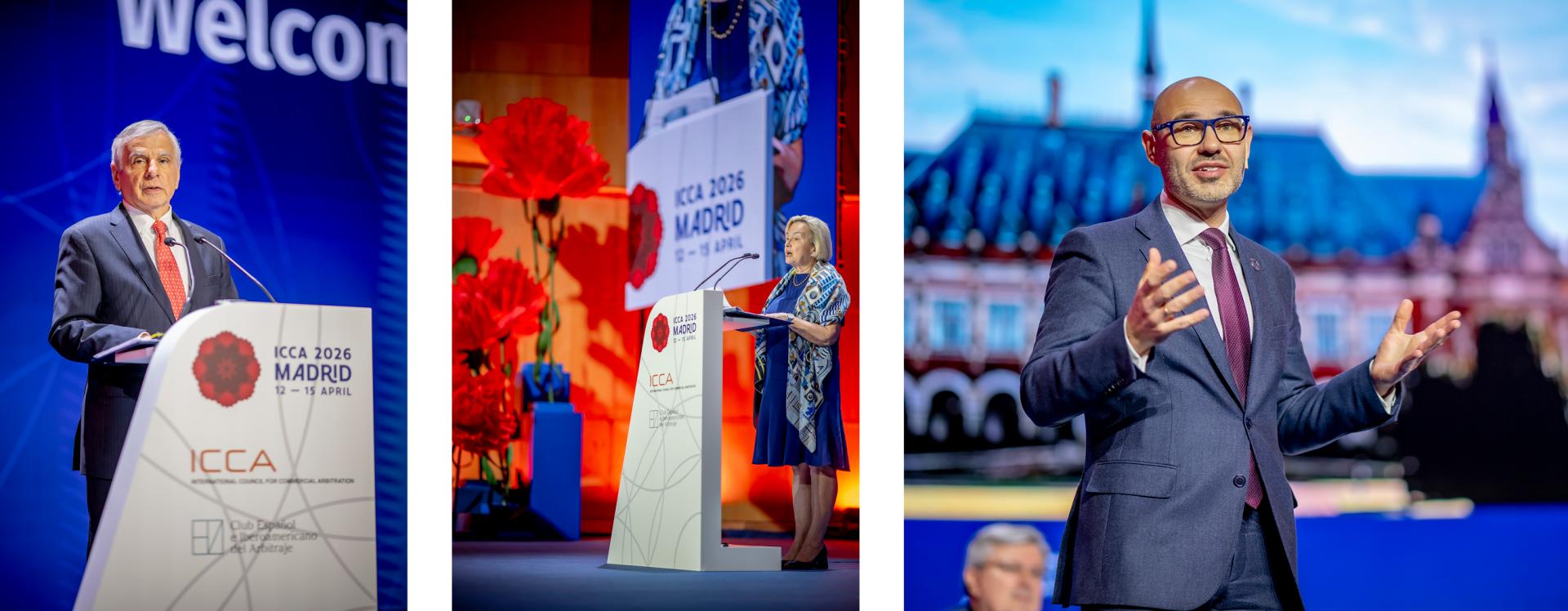
Dr. Stanimir Alexandrov, Ms. Anna Joubin-Bret, and Dr. Hab. Marcin Czepelak spoke at the Opening Session.
Over the course of three days, the fifteen panels of the Congress fifteen panels explored the impact of sanctions, armed conflict, ESG and climate-related measures, and emerging areas such as space commerce, as well as technical disputes in sectors including construction, energy, infrastructure, and technology. The panels also addressed broader questions concerning procedural integrity, ethics, soft law, mediation, diversity, efficiency, and the growing influence of artificial intelligence on arbitral practice and scholarship. Throughout, the programme returned to a central idea: not a simple choice between the local and the global, but how international arbitration can continue to harmonise global standards with local practice, while remaining responsive to change, equal to new challenges, and relevant across jurisdictions.
On Wednesday afternoon, the Closing Keynote address was delivered by Prof. Dr. Teresa Rodríguez de las Heras Ballell, President of the European Law Institute, on the topic “Redefining Global-Local Dynamics in Arbitration: Convergence, Divergence, or AI-Human Hybridisation.” She examined the growing impact of artificial intelligence on arbitration and its implications for the balance between global convergence and local divergence.
Video recordings of the full Congress sessions will be made available to ICCA members in the coming weeks.
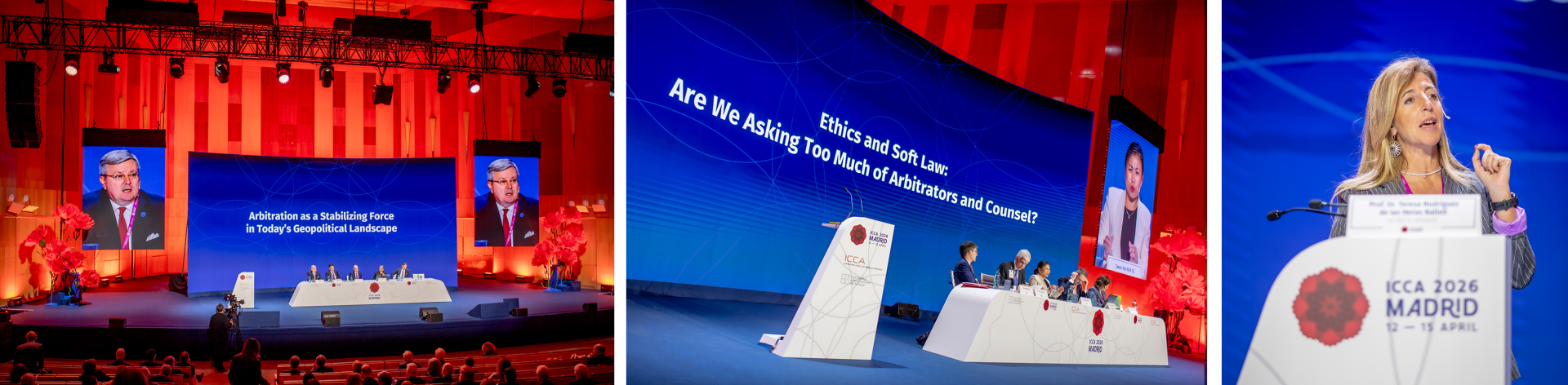
Panel discussions; Prof. Dr. Teresa Rodríguez de las Heras Ballell delivered the Closing Keynote address.
The Host Committee organised a variety of social events showcasing Spanish gastronomy and culture, bringing together friends and colleagues, old and new, throughout the Congress. Highlights included the Gala Dinner at the Crystal Gallery of the Cibeles Palace, where delegates enjoyed a flamenco performance before continuing to a Young ICCA after-party.

The Gala Dinner took place at the Cibeles Palace.
Alongside the panel discussions, the Congress also served as an opportunity to highlight the work of ICCA’s various project groups through launch events and meetups, including:
- the launch of the ICCA Research Group on Arbitrator Immunity project, together with survey responses on arbitrator immunity and liability covering an initial round of 15 jurisdictions worldwide;
- new Spanish and Portuguese translations of the Guidelines on Standards of Practice in International Arbitration, prepared by the ICCA Task Force on Standards of Practice in International Arbitration;
- the second edition of the ICCA Drafting Sourcebook and Checklist PO1, together with Spanish and Portuguese translations;
- the 2026 Update to the Report of the Cross-Institutional Task Force on Gender Diversity in Arbitral Appointments and Proceedings, publishing data from 39 arbitration organisations, initiatives, and firms, and expanding its review of key issues concerning gender diversity, including new data on repeat and sole arbitrator appointments, tribunal chairs, and all-women tribunals; and
- Jonathan Brosseau was announced as the recipient of the third edition of the ICCA-Guillermo Aguilar-Alvarez Memorial Prize at the Opening Ceremony of the Congress.

ICCA authors and contributors gathered to launch and celebrate ICCA Projects and Reports.
ICCA has long sought to open Congress attendance to a broader and more diverse range of delegates. This commitment was continued for the Madrid Congress through the ICCA Inclusion Fund, which supports participation in ICCA activities, including attendance at the Congress, for those who would not otherwise have adequate means. On Monday 13 April, ICCA hosted a meet-and-greet bringing together the approximately 30 ICCA Inclusion Fund recipients, representing over 20 jurisdictions, with members of the ICCA and Young ICCA leadership to exchange ideas, build networks, and engage with the panel discussions. ICCA also continued its support for the Karl-Heinz Böckstiegel Foundation’s scholarship programme for young academics active in the field of international arbitration, enabling nine scholars from diverse backgrounds to attend ICCA 2026 Madrid. During the Congress, the Foundation hosted a lunch for scholarship recipients and programme supporters, providing a further opportunity for discussion and exchange.
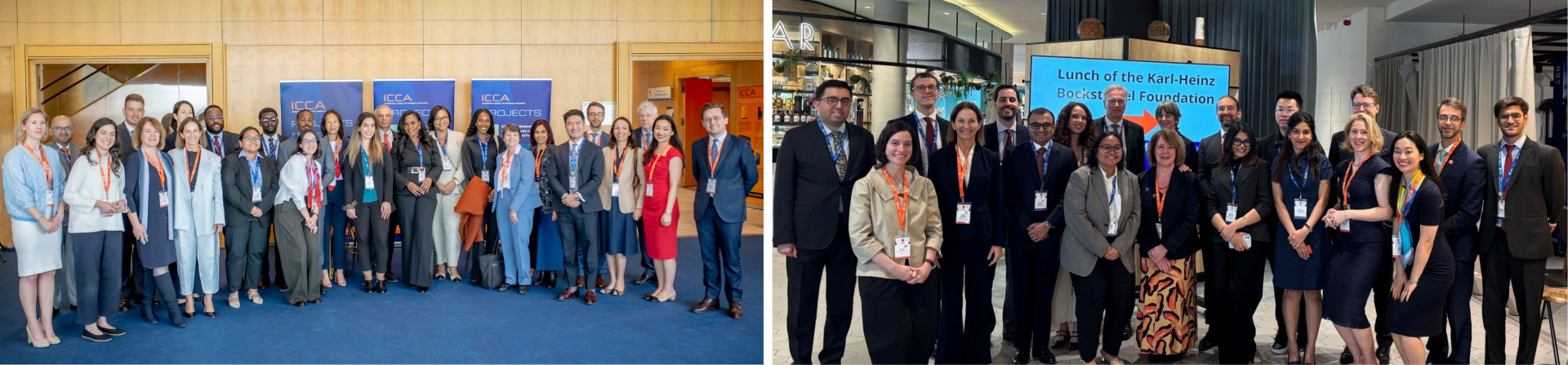
ICCA Inclusion Fund recipients met with members of the ICCA and Young ICCA leadership; the Karl-Heinz Böckstiegel Foundation supported the attendance of nine young academics at the Congress.
The 27th ICCA Congress concluded with Dr. Stanimir Alexandrov handing over the presidency to Audley Sheppard KC, who will now serve a three-year term. Audley commented:
“I am excited to begin my term as ICCA President and look forward to working closely with the dispute resolution community to implement the mission of ICCA to promote the use, and improve the processes, of international arbitration and conciliation. I would like to thank the ICCA Governing Board for the trust and confidence they have placed in me.”