International Arbitration: Local, Global or Both? | The Reading List
 The 27th ICCA Congress asks: “International Arbitration: Local, Global or Both?” Its theme explores how international arbitration can balance cohesive global standards with the preservation of regional and cultural wealth, examining the interplay between adaptation and harmonization, and the extent to which regional trends and preferences are not signs of fragmentation but rather forces that widen the base of acceptance and make arbitration more resilient.
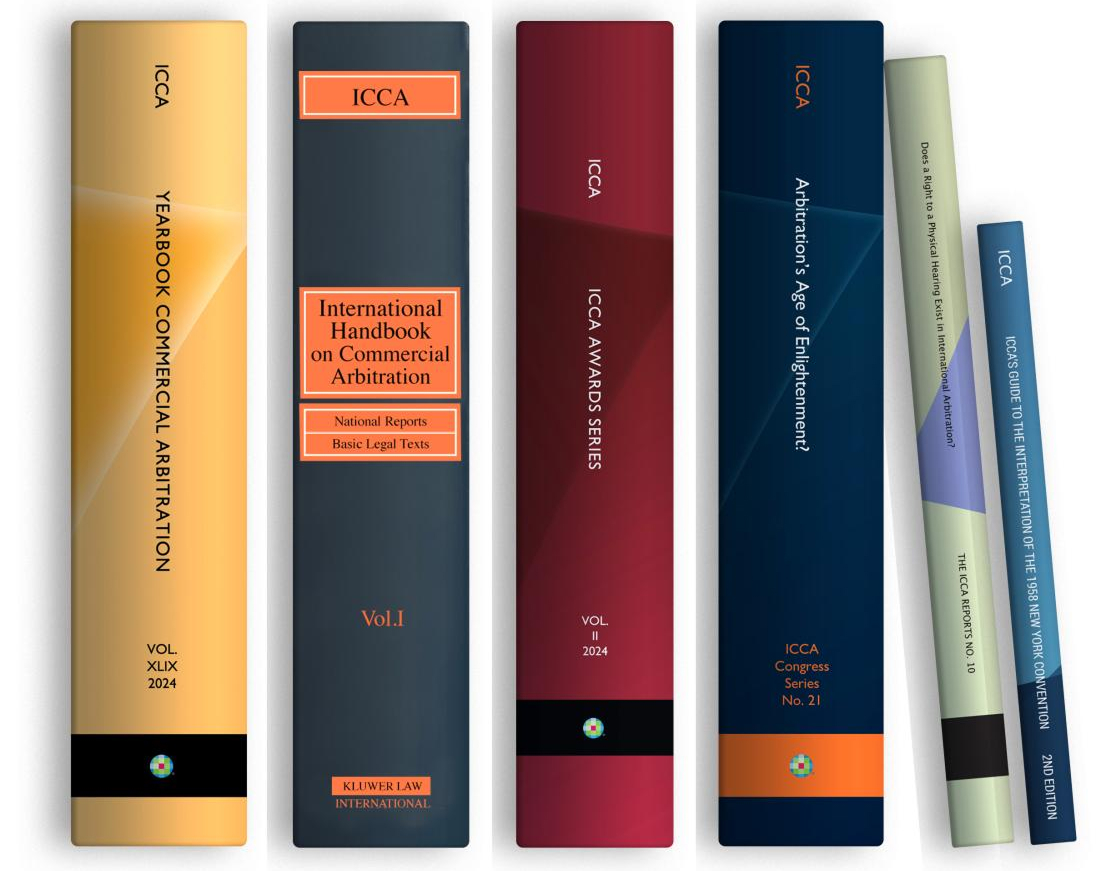
ICCA has a long tradition, through its publications, of bridging local legal cultures and the global practice of international arbitration. In our publications, we document how national legislators implement international harmonizing instruments into domestic legal frameworks, how national courts apply those instruments across jurisdictions, and how practitioners and scholars address the challenges arising from this tension. Today, we highlight ICCA publications that speak directly to the Congress theme, resources that, taken together, map the field’s ongoing negotiation between the local and the global.
ICCA Yearbook Commercial Arbitration
The ICCA Yearbook Commercial Arbitration has been compiling arbitration-related decisions from national courts around the world for over 50 years, with the aim of showing how courts across jurisdictions interpret and apply the major multilateral arbitration conventions and address issues of general interest to international arbitration practice. The Yearbook is, at its core, a record of that interplay between the local and the global: each decision is a moment at which a national court, within its own procedural framework and constitutional principles, applies an international instrument designed to harmonize arbitral practice.
For ICCA Madrid, ICCA dedicated the first update of the 2026 Yearbook to decisions rendered in Spanish-speaking language jurisdictions, enriching an existing collection that includes almost 300 decisions rendered by the courts of Argentina, Chile, Colombia, Costa Rica, Cuba, the Dominican Republic, Ecuador, El Salvador, Guatemala, Mexico, Panama, Peru, Spain, Uruguay, and Venezuela.
The decisions in this latest Yearbook update directly relate to the Congress theme. Courts across Colombia, Costa Rica, Ecuador, Peru, and Spain are navigating the same foundational questions as the Congress. When should a local procedural rule give way to an international treaty provision? The Corte Constitucional of Ecuador answered this question in the context of enforcement proceedings, holding that a domestic homologation requirement for foreign awards had to give way to Article III of the New York Convention, which prohibits imposing more onerous conditions on foreign awards than on domestic ones. How should the public-policy exception to enforcement be calibrated so as not to become a vehicle for an unpermitted review of the merits of a foreign award? Two decisions by the Colombian Corte Suprema de Justicia (Zurgroup S.A. v. Importaciones y Exportaciones Fenix S.A.S. and Tricon Dry Chemicals LLC v. Agroindustrias El Molino de la Costa S.A.S.), a decision from the Costa Rican Corte Suprema de Justicia and a decision by the Peruvian Corte Superior de Justicia, as well as decisions from the Spanish courts of Barcelona, Madrid, and Navarre, converge on a consistent answer: public policy means the fundamental principles of the domestic legal order, not a licence to revisit the tribunal’s findings of fact or law.
ICCA International Handbook on Commercial Arbitration
Covering arbitral law and practice in over 85 countries through jurisdiction-specific reports, the ICCA International Handbook on Commercial Arbitration is a natural companion to a Congress focused on the relationship between the local and the global. For Madrid, the National Report for Spain, authored by Bernardo M. Cremades Sanz-Pastor (Sr) and David J.A. Cairns, is an especially apt starting point, offering a concise guide to Spanish arbitration law, judicial practice, and institutional context through which to approach the broader Congress theme.
Must-Read Reflections from past ICCA Congresses
Across successive editions, the ICCA Congress Series has explored how international arbitration navigates the tension between transnational standards and the influence of domestic legal and cultural contexts. Several essays from past Congresses speak directly to this year’s theme. In 'How Does International Arbitration Fare in a World Creeping Towards Unilateralism, Protectionism and Nationalism?', published in Arbitration’s Age of Enlightenment? (ICCA Congress Series No. 21, Edinburgh 2022), Hi-Taek Shin reflects on how international arbitration responds to a world increasingly shaped by unilateralism, protectionism, and nationalism. Sundaresh Menon’s 'The Influence of Public Actors on Lawmaking in International Arbitration: Domestic Legislatures, Domestic Courts and International Organizations', published in Evolution and Adaptation: The Future of International Arbitration (ICCA Congress Series No. 20, Sydney 2018), and Emilia Onyema’s 'The Jurisdictional Tensions Between Domestic Courts and Arbitral Tribunals', published in International Arbitration and the Rule of Law: Contribution and Conformity (ICCA Congress Series No. 19, Mauritius 2016), similarly examine the role of domestic systems in shaping, supporting, and at times constraining arbitral autonomy.
The theme also invites reflection on whether harmonization can coexist with regional and cultural specificity. Giorgio Fabio Colombo’s 'Global Harmonization of Arbitration and Respect of Cultural Differences. Comparative Law as Due Process?', E. Rainbow Willard’s 'Our Linguistic Currency Is Cosmopolitanism: Explicit and Implicit Code-Switching in International Arbitration', and Nicolás Gálvez Solís’s 'The Attack of the Clones: On the Road Towards a Unified Culture in International Arbitration?' – all published in International Arbitration: A Human Endeavour (ICCA Congress Series No. 22, Hong Kong 2024) – explore, from a different perspective, the development of a shared arbitral culture and the benefits and limits of that convergence.
Young ICCA Voices Magazine
Young ICCA Voices offers a useful complement to ICCA’s more established publications, extending the conversation to newer voices in the field. Launched in 2024 as an online magazine created by, and for, young arbitration practitioners, it is designed to provide practical and current content in an accessible and interactive format. Its forthcoming fifth issue is framed around the same theme as the Madrid Congress, ‘International Arbitration: Local, Global or Both?’, and will explore how global standards interact with regional developments, local priorities, and jurisdiction-specific practice.
Kluwer Arbitration Blog on ICCA Madrid 2026
The blog coverage of the Congress
For those who will not be in Madrid in person, it is still possible to follow and participate in the debates through the Congress coverage on the Kluwer Arbitration Blog, which will be reporting through daily round-ups on the discussions held on the different panels, bringing the conversations from the Congress floor to readers around the world.
The blog coverage will extend the reach of the Congress during and after the event, ensuring that the perspectives shared in Madrid remain visible and connected to the broader global dialogue on the future of international arbitration.